Monday, October 10, 2011

African-American's: Enslavement, Racial Violence & Civil Rights

After reading through the posted articles and websites for this weeks reading, it was shocking to read about lynching or racial segregation during the 18th and 19th century, which isn't too long ago. While some of the passages were a slave narrative, and others were abolitionists like Angelina Grimke or a civil rights leader like Ida B Wells, all have some things at least one common characteristic: discrimination against African-American, mainly because of their "skin color" and rose from the birth of slavery between the 15th-16th Century.

While much of these first few readings was not really "new" information as most of it is learned through out general schooling. What was very interesting to me was the more recent occurrences of forms of lynching. Although lynching is a felony, it seems that in some towns or places where there is still racial tension and a form of segregation, hate crime occur.

While reading the article about Brandon McClelland in 2008, was shocking as it was one of the more recent incidents. By reading the article and developing my own opinion on the article I feel as though there was some type of racial tension even though the article states,"they were friends".

I was also shocked to hear that a defense attorney in Texas had previously let Mr. Finley "off" by believing his story.

The article states:
"In 2003, Lamar County D.A. Gary Young served as Mr. Finley’s court-appointed defense attorney when Mr. Finley pleaded guilty to manslaughter for shooting a friend to death.
The victim in the Finley manslaughter case was White and Mr. Finely told police he was sitting in a truck with his friend when two Black men tried to rob them. Mr. Finley said he fired at the robbers but accidentally shot his friend. An autopsy determined the victim suffered three gunshot wounds to the head, but the district attorney at the time accepted Mr. Finley’s story that the shooting was an accident. He was offered a plea bargain on a reduced manslaughter charge and eventually served a little over a year of a four-year prison sentence. The alleged robbers were never found."
This quote from the article sound like the story given, wasn't the complete truth. it seems as though the killer, Mr Finley,  got off "free" with barely a "slap on the wrist".

It seems as though the views of these people in these parts where its still racially divided have swayed decisions when it come to"hate crimes" and it doesn't seem like there is a fair neutral way for African Americas to get equal justice to the "whites" in those areas.

Coming to America: Chapters 7 & 8

While both chapters were very interesting to see the push, pull, means, and types of jobs many of these immigrant had. Another thing that i found interesting was the little communities each group made for themselves as a way to become comfortable to their new surrounding in America with familiar languages, traditions and even familiar people.

I was especially interested in the story about the Italian immigrants since I am half Japanese and half Italian. I am very close with my grandparents on my mothers side (Japanese) but was only able to know my grandmother on my fathers side (Italian) since my grandfather passed away when my father was only 20 years old. Since my father's mother passed away a little over 7 years ago, I was still very young and didn't know that they had an amazing immigration story as well. Although I will never know the entire immigration story from either of my grandparents there are a few detail of their story that I have heard from my great-grandmother since she lived until she was 95 years old.

My great-grandfather and great-grandmother were married and both came from Sicily. They moved to New Jersey then eventually moved to Pennsylvania because of the Italian community there and their friends had moved there a few years prior.  Once settled in in PA, my great-grandfather was a tailor and a shoemaker and had his own shop. My great-grandmother helped him run the family business which was in a building in which they lived on top of their shop. The eventually had son, which was my grandfather and raised him there since their business was a success.When my grandfather got old enough he helped in the shop before and after school. My great-grandmother Jenny also told me about a story when she was at the shop alone one day preparing food for dinner in the afternoon and my great-grandfather and grandfather were both out running an errand. Since their business was successful they were very wealthy and was the only shop with and "open" sign in their window. That day a police officer showed up to the shop and told my great-grandmother, "you know, those signs aren't allowed to be posted without paying a fee.. its gonna cost ya!". So my great-grandmother, with her spunky attitude tells the officer to, "Come around the back". As she met the officer she handed him a white envelope. I was eager to hear how much money she gave him but the response I got was, "I only gave him $5... its not like he was gonna tell anyone... I know that officer was tryin' to trick me so I sent him on his way and never heard back from him!"

Remembering this story makes me think of how many other officers around America might have been doing the same thing to "newer" immigrants to find ways to take advantage of them or try to scare them. This seems like it would have been a common practice for "old" immigrants or people in high job positions maybe of British decent.

Sunday, September 25, 2011

Coming to America: Chapter 6

The text starts with a new distinction between immigrants which shifted from "old" to "new" to north western Europeans to south eastern Europeans. Many of these differences in the distinction of these two groups is religion, language and rural or urban lifestyles.

In the 19th century many of the push factors changed from previous immigration factors. Many people from Ireland during the time of the 1840s and 1850s were heavily influenced by the potato famine or "great hunger". But a main factor that was still present before and after this famine, was the Catholic religion of the people.

The divisions among the Germans became more severe during this time as well. The text states that many of these divisions were caused by geography, ideology and religion. The Scandinavians were a much smaller group than the Germans and Irish. All of these groups have their similarities and differences as to their own reasons why they came to America. The answer will vary from person- to- person. Many of the pull factors are impacted by the social and political actions during the time period of their immigration as well.

In the beginning of the text it mentions the National Origin Act of 1924, which is a apart of the Immigration Act of 1924 as well as the Asian Exclusion Act. All of these acts are to minimize the number of immigrants  into the United States since the population was increasing with number of different ethnicities. This reminded me of the Japanese Exclusion Act where the United States put Japanese-American's into internment camps. This stuck to me because it reminded me of my grandfather who was placed in a camp with his family. After hearing his story, I can only imagine that these other people felt the same discrimination as the Japanese did during this time.  Even today, if people are excluded from a group of friends, they feel like they don't belong or being secluded out, which is what most of these exclusion and immigration acts did.


Below is a picture of the National Origin Act of 1924, which is usually referred to as the Immigration Acts.

Monday, September 19, 2011

Chapter 4: Discussion Questions

1) Why did many of theses ethnic groups move in large groups?


2) Why was the advertised notion of America to be "a land without landlords where the land was for those who wanted it", such a major pull factor for some of these immigrants?


3) Why did Jews allow marriage between other faiths?

Coming to America: Chapter 4-5

 In the beginning of chapter 4, the text refers to the first census and how three-fourths of the population were white and from England and more than two-fifths were from Britain. As mentioned in class, the Natives were not included in the census which really messed up the actual  number of  people in the "New World".

Many other ethnicities were coming to America, like the German, aka Dutch, Scotch Irish, Scots, Irish, Welsh, French, Spanish, Swedes and Jews. Most of these groups were able to keep their language and established their own communities throughout the states.  The Germans were skilled miners, whom many of which were either Protestant, Catholic or Jewish. The Scotch Irish refer to the Presbyterians from the Scottish lowlands who settled in Northern Ireland.  The Scots are those who came directly from Scotland. The Irish were in American during many of the earlier years. Many of the Jews established synagogues in five states. Many of the other ethnicities also arrived in specific ports or areas when coming to America. I think these "community" settings helped these people adjust to their new life in America and being away from home.

in the fifth chapter, it describes the time near the end of the seventeenth century where the population of non-English decent dropped increasingly at this time while people of English decent were higher. The dominance of the English culture was heavier now than ever before. This was also the beginning of Indian segregation  with Indian reservations, many of the colonists called these reservations "Indian plantations", "Indian villages" or "praying towns".

Discrimination against other ethnicities were also against the Germans and well as the Blacks also. I think that from the slavery, many Europeans still felt superior than other groups including other "white" groups. At the beginning of this chapter it asks the question of "what is an American" and provides an answer by Michael-Guillaume-Jean de Crevecoeur. But i think this question doesn't have an answer that is specific based upon someone's ethnicity or color. I think an American is someone who lives in America or calls America one of their home because many people now have multiple places that they call home. There are many other things that make people apart of America and giving a definition may exclude a part of a person.

Monday, September 12, 2011

Coming to America: Chapters 1, 2, & 3

Before reading the first chapter, I didn't really know the exact different between migration and immigration. I knew there was a difference but reading this text really put it in terms for me. With migration simply meaning moving and immigration meaning moving across national frontier, helps me understand and think in terms of how these words are applied to a specific migrating group, when reading.

It wasn't really shocked by the text when it states that the Europeans thought of themselves as superior to any/all cultures they encountered. It seemed that way to me ever since I first learned about the Europeans contact with the Native Americans when I was younger. With the Europeans forcing their language onto the Natives and suppressing their own cultures and beliefs showed me a sense of superiority at a young age. Its just that most of the texts you read don't blatantly say it.

In the second chapter, it describes the majority of Europeans were British-- meaning their language and culture would be English. Since Europeans were superior and felt their cultures, languages, traditions and beliefs were the "chosen one', this became apart of "American" cultures.

There were large numbers of people migrating and immigrating to "America". Many of these groups of people didn't know how to survive in these types of living conditions, like the natives had learned. From that, many of these English immigrants in Maryland, Virginia and New England had more deaths than living people. Eventually, the Europeans figured out how to take advantage or "use" the Natives for what they wanted. This helped more people survive from hunger and diseases, slowly resulting in their population to increase instead of decrease.

One of the most surprising things i read was about the Indian massacre. Although I have heard about it before, I had never read it how the text stated the details in number. From the large number of Natives that lost their land or were killed, shows a that more than half of their population was gone.

When reading the section about indentured immigrants made me think of the reason why racism and segregation started. As the text describes, indentured servants were both African and European and slowly transformed into only African- because of color. This lead to color segregation and racism of thinking these people of African decent are "different" or "less superior" from their skin color. African were the most "American" in the sense that they lost almost all of their culture, tradition and beliefs when being forced into labor. They were also stripped of  their language and were not allowed to have the ability to read and write.

The third chapter continues with the African slave trade. There was almost no existence of letters, diaries or written evidence during this time period because of the lack of literacy. This division in literacy and color/race also helped create a division between social classes. Since  the "white, upper class" people (Europeans, usually) were literate and owned businesses and houses while the "black, lower class" people (Africans) were not literate and couldn't own anything, not even their own freedom.

This form of "cheap labor" increased for business profit. The conditions for these people were horrible and it became apart of western ways and European imperialism. many industries became slave-based, mostly farming like cane sugar. This also helped develop "American capitalism"

Thursday, September 8, 2011

Prehistory: Pacific Seafarers & Maritime Cultures (p.8-13, 22-29)

The first portion of the text began with seafaring. I had a idea of what the term meant but not exactly. After reading more into the text, I realized that my definition was correct. I never realized that these people who wanted to migrate to other parts of the earth had to figure out a way- by boats. May of these voyages probably werent successful at first because of technical issues when developing their boat. To imagine that these migrators could think of something like a boat that is so complex and be able to successfully reach land at the end of their voyage, says a lot about their intellect and society.

I found it very surprising and interesting that the Polynesian migration was included. Throughout all of my previous history classes I have never heard about the Polynesians' history. i specifically liked reading how the seafaring was incorporated in how the polynesians were able to travel through the Pacific oceans as well as other groups who traveled long distances, crossing oceans.

I also found it very interesting how one of the "branches" of Austronesians left a trail of "distinctive decorated ceramics". This reminded me of the story of "Hansel and Gretel" who left a trail of bread crumbs because it seems as though this branch of  Austronesian people wanted there to be a way for themselves or others to gain a sense of direction.

In the second part of the reading, it described the Native American seafaring more specifically. Much of the evidence throughout all of the text, as a whole, includes supporting evidence of seafaring in the early years. I found the shape of their boats the most interesting. The Native Americans seemed to have built a canoe-like row boat. With their weaving skills, it seems that they would have made a more stable version of a boat.


                                             Reed Boat:


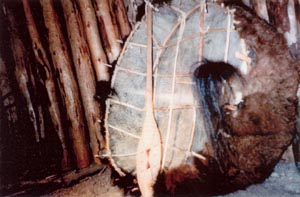
                                             Bull Boat: